 Skip to content
What Pain and Suffering Settlement Amounts Really Look Like
When you’re hurt in an accident, the average pain and suffering settlement varies widely based on your specific injuries and circumstances. Here’s what you need to know:
Quick Settlement Ranges:
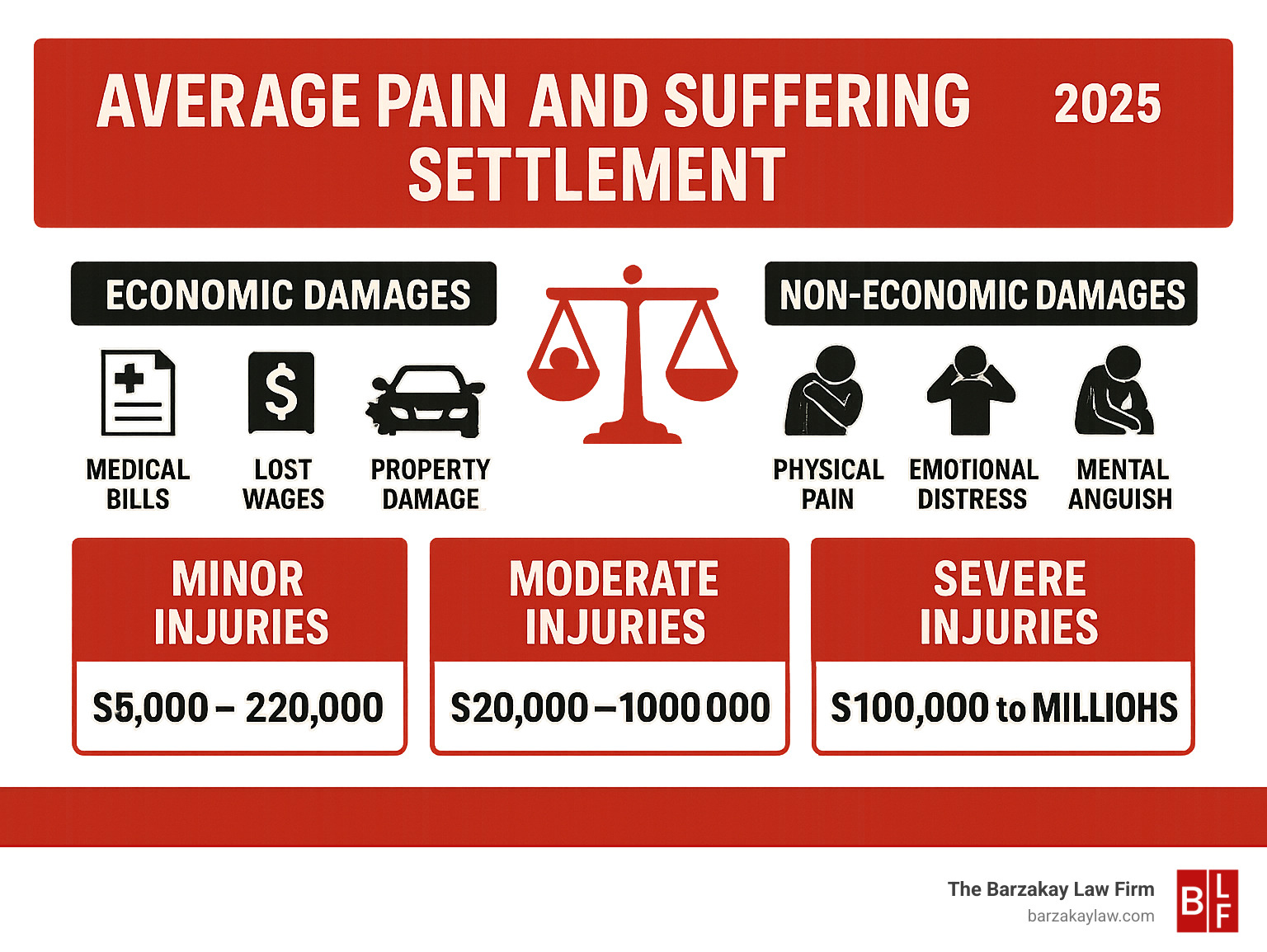
- Minor injuries (sprains, mild whiplash): $5,000 – $20,000
- Moderate injuries (fractures, herniated discs): $20,000 – $100,000+
- Severe injuries (spinal cord, brain trauma): $100,000 to millions
Key factors that affect your settlement:
- Severity and permanence of your injury
- Medical expenses and lost wages
- Impact on your daily life and relationships
- Strength of your evidence and documentation
After a traumatic accident, you’re dealing with physical pain, emotional trauma, and mounting bills. While medical expenses and lost wages are easy to calculate, putting a dollar amount on your pain and suffering feels impossible.
Pain and suffering settlements compensate you for the physical discomfort and emotional distress that can’t be measured with receipts. These are called non-economic damages – they’re separate from your medical bills and lost income.
In Florida, there’s no simple formula for calculating pain and suffering. Insurance companies use different methods, and every case is unique. Your settlement depends on factors like how severe your injuries are, how they’ve changed your life, and how well you can prove your damages.
For families in Hollywood, Miami, and Boca Raton dealing with serious injuries, understanding these settlement ranges helps set realistic expectations as you focus on healing and rebuilding your lives.
What Exactly is “Pain and Suffering” in a Florida Injury Claim?
In a Florida injury claim, pain and suffering refers to the non-physical harm from an accident. These are non-economic damages, separate from concrete costs like medical bills (economic damages). Pain and suffering covers the sleepless nights, anxiety, and inability to enjoy life as you did before.
Under Florida law, it includes the mental, emotional, and physical anguish from someone else’s negligence. This can be physical pain, emotional distress (anxiety, depression), mental anguish, loss of enjoyment of life, disfigurement, and daily inconvenience. For families in Hollywood, Miami, and Boca Raton, understanding these damages is crucial for fair compensation. More info about seeking compensation for injuries
| Physical Pain Examples | Emotional Distress Examples |
|---|---|
| Chronic back pain | Anxiety and panic attacks |
| Nerve damage | Depression and hopelessness |
| Whiplash | Post-Traumatic Stress Disorder (PTSD) |
| Fractures requiring surgery | Sleep disturbances and nightmares |
| Headaches and migraines | Fear of driving or specific situations |
| Restricted movement | Humiliation or embarrassment |
| Scarring and disfigurement | Loss of intimacy or companionship |
Physical Components of Your Suffering
The physical impact of an accident often extends far beyond the initial injury. Back and neck injuries like whiplash or herniated discs can lead to chronic pain. Traumatic brain injuries (TBIs), even mild ones, may cause lasting headaches, dizziness, and cognitive issues that affect work and daily life.
Broken bones can require surgery and lengthy physical therapy, while internal injuries may need complex, life-saving treatment. When pain becomes chronic, it is a constant companion that significantly impacts your life and your average pain and suffering settlement.
If you’re dealing with a brain injury, understanding potential compensation is important. A guide to Traumatic Brain Injury Settlements
The Hidden Toll: Emotional and Mental Anguish
Emotional wounds can be more profound and lasting than physical ones. Anxiety about the future, finances, and personal safety is common. Depression can set in when significant life changes, like being unable to work or enjoy hobbies, lead to hopelessness.
Post-Traumatic Stress Disorder (PTSD) may cause flashbacks, nightmares, and severe anxiety related to the accident. Sleep disturbances, whether from physical pain or a racing mind, add to the suffering. Specific fears, such as a fear of driving, can develop. Humiliation from scars or disabilities may lead to social withdrawal.
For couples, loss of consortium describes the negative impact on a relationship’s intimacy and companionship. These hidden wounds are a crucial part of any pain and suffering claim.
How is Pain and Suffering Calculated in Florida?
Calculating pain and suffering is not like adding up bills; there’s no receipt for anxiety or sleepless nights. This makes these claims naturally subjective, with no universal formula.

In Florida, judges and juries determine fair compensation based on evidence. Insurance companies often use software to generate low settlement offers. To counter this, attorneys and adjusters in Hollywood, Miami, and across South Florida typically use two common methods as starting points for negotiations to determine what an average pain and suffering settlement might look like.
More info on calculating damages.
The Multiplier Method
The multiplier method is a common way to estimate pain and suffering. It involves multiplying your total economic losses by a number that reflects your injury’s impact.
First, we calculate your economic damages by adding up all medical bills, lost wages, and other out-of-pocket expenses. Next, we apply a multiplier, typically between 1.5 and 5, based on the injury severity factor. Minor injuries that heal quickly might get a multiplier of 1.5 to 2. Serious injuries with long recovery times, permanent issues, or severe trauma could warrant a multiplier of 3 to 5.
For example, if your economic damages are $15,000, a multiplier of 3 for a moderate injury would suggest $45,000 for pain and suffering. For a severe injury with $50,000 in economic damages, a multiplier of 3 could result in $150,000 for pain and suffering.
The Per Diem (Per Day) Method
The per diem method assigns a dollar amount for each day of suffering. It starts by setting a daily rate, often based on your daily earnings before the accident. This rate is then multiplied by the number of days of suffering, from the accident date until you reach “maximum medical improvement” (the point where you’re not expected to get much better).
For example calculation: if your daily rate is $200 and you suffered for 183 days, your pain and suffering damages would be $36,600 ($200 x 183). This method is most effective for shorter-term injuries with a clear recovery timeline.
Both the multiplier and per diem methods are starting points for negotiation, with the final amount depending on your specific case and documentation.
What is the Average Pain and Suffering Settlement in Florida?
There is no single average pain and suffering settlement in Florida, as each case is unique. Settlement amounts can range from thousands for minor injuries to millions for catastrophic ones.

A key factor in Florida is the “serious injury” threshold for car accidents, a result of our No-Fault Law. To pursue pain and suffering damages, your injury must involve permanent damage, significant scarring, loss of a body function, or death. If your injuries don’t meet this threshold, you are generally limited to the economic damages covered by your Personal Injury Protection (PIP) insurance.
Understanding this rule is crucial for families in Hollywood, Miami, and Boca Raton to set realistic expectations.
More info on understanding settlements.
Understanding the average pain and suffering settlement for minor vs. severe injuries
While there’s no exact average pain and suffering settlement, typical ranges based on injury severity provide a guideline:
- Minor injuries (sprains, mild whiplash) with short recovery times often settle for $5,000 to $20,000.
- Moderate injuries (fractures, herniated discs) that disrupt life and require extensive treatment can result in settlements from $20,000 to $100,000 or more.
- Severe injuries (spinal cord damage, traumatic brain injuries, amputations) are life-altering and can lead to settlements from $100,000 into the millions.
These ranges are broad because specific circumstances matter greatly. For example, a herniated disc requiring multiple surgeries will be valued much higher than one that heals with physical therapy.
How factors influence the average pain and suffering settlement
Several key factors influence your settlement amount:
- Severity and Permanence of Injury: Permanent disabilities and chronic pain lead to higher settlements than temporary injuries.
- Medical Treatment and Recovery Time: Extensive treatment, multiple surgeries, and long recovery periods indicate greater suffering.
- Impact on Daily Life: The inability to work, enjoy hobbies, or care for your family is a significant factor.
- Emotional Impact: Documented anxiety, depression, or PTSD will increase the value of your claim.
- Strength of Evidence: Strong medical records, photos, and personal journals are crucial for proving your suffering.
- At-Fault Party’s Insurance Coverage: The available insurance policy limits can cap your potential recovery.
- Comparative Negligence: Under Florida law, your settlement is reduced by your percentage of fault in the accident. If you are 20% at fault, your award is reduced by 20%.
Understanding these factors is key to building a strong case for your average pain and suffering settlement.
Proving and Maximizing Your Claim in South Florida
Building a strong pain and suffering case requires thorough documentation and compelling evidence to justify the average pain and suffering settlement you deserve.

In South Florida, from Miami to Hollywood, we see how accidents disrupt daily life. Documenting these changes is critical, as insurance companies are skeptical of claims they can’t see on an X-ray. Starting this documentation process early and creating a detailed record of your experience is vital.
How to Maximize Your Settlement Offer.
The Power of Evidence
Strong evidence is the foundation of your case. Each piece helps create a complete picture of how the accident affected you.
- Medical Records: These are the backbone of your claim, detailing your injuries, treatments, and progress. Consistent treatment is crucial.
- Doctor’s and Therapist’s Notes: Observations about your physical pain, limited motion, anxiety, or depression carry significant weight.
- Visual Evidence: Photos of your injuries, especially as they heal, and any permanent scarring are compelling.
- Personal Pain Journal: A daily record of your pain levels, emotional state, and how injuries impact simple tasks provides a powerful, personal account.
- Medication Receipts: Receipts for pain relievers, sleep aids, or anti-anxiety drugs show the ongoing nature of your suffering.
- Testimony from Family and Friends: Statements from loved ones about changes in your personality and lifestyle provide an outside perspective on your suffering.
The Florida Legal Framework: Caps and Deadlines
Understanding Florida’s legal rules is crucial for protecting your rights.
- Statute of Limitations: For most negligence cases, you have two years from the accident date to file a lawsuit. Missing this deadline means you lose your right to seek compensation.
- Medical Malpractice Caps: While most personal injury cases in Florida do not have caps on pain and suffering damages, medical malpractice claims can be more complex and may have specific rules.
- Florida Statute 627.737: This law provides the legal basis for pain and suffering claims, defining the types of anguish that can be compensated. Florida Statute 627.737 on pain and suffering
- Florida’s No-Fault Law: For car accidents, you must meet the “serious injury” threshold (permanent injury, significant scarring, loss of bodily function) to claim pain and suffering damages beyond your PIP coverage.
This legal framework makes proper documentation and legal guidance essential.
Frequently Asked Questions about Pain and Suffering Settlements
Here are answers to common questions we hear from families in Hollywood, Miami, and South Florida about personal injury claims.
How do different accident types (car vs. slip and fall) affect settlements?
The type of accident significantly affects your average pain and suffering settlement because the evidence, legal rules, and insurance policies differ.
- Car Accidents: These claims rely on evidence like police reports and witness statements. Florida’s No-Fault law requires a “serious injury” to pursue pain and suffering damages.
- Slip and Fall Cases: These are premises liability claims. We must prove the property owner was negligent, which can require complex investigation of maintenance records or security footage.
- Medical Malpractice Claims: These cases are challenging, requiring proof that a healthcare provider violated the standard of care, often supported by testimony from medical professionals. More info on medical malpractice claims
The available insurance coverage for each type of accident also varies and can limit the total amount you can recover.
Do I have to go to court to get a pain and suffering settlement?
The vast majority of personal injury cases settle out of court. The process usually begins after we gather evidence and send a demand letter to the insurance company. This letter details your injuries and demands fair compensation.
We then enter negotiations with the insurance adjuster, using our evidence to argue for the amount you deserve. Most cases are resolved at this stage. If the insurance company’s offer is too low, we may advise filing a lawsuit. The decision to accept a settlement or go to trial is always yours.
Why you should consider not settling out of court
The role of a demand letter is a critical tool, as it lays the foundation for all negotiations and shows we are prepared to fight for your claim.
Will my health insurance have to be paid back from my settlement?
Yes, your health insurer often has a right to be paid back from your settlement for medical care they covered. This is called subrogation, and they do it by placing a lien on your settlement. Medicare, Medicaid, and private insurers all have rules regarding liens.
A key part of our service is negotiating these medical liens to reduce the amount you have to pay back, which leaves more money for you.
The final settlement distribution is handled through our firm’s trust account. From the settlement, we pay attorney fees, case expenses, and negotiated liens before sending you the final balance with a detailed breakdown. We ensure you understand this process from the start.
Navigating Your Claim for Fair Compensation
After an accident, calculating your average pain and suffering settlement and dealing with insurance companies is overwhelming. The complexity of valuation makes these claims challenging, as there’s no simple calculator for your suffering, and insurers aim to pay as little as possible.
This is where legal representation becomes crucial. At The Barzakay Law Firm, we handle personal injury cases across South Florida, including Hollywood, Miami, Boca Raton, Sunrise, Orlando, and Fort Lauderdale. We understand the local courts and insurance tactics.
We work on a contingency fee basis, so you pay nothing unless we win your case. This allows you to access legal help without financial stress.
Protecting your rights involves documenting your suffering, negotiating with insurers, handling liens, and being prepared for court. Your main priority should be focusing on recovery. Let us build your case and fight for the compensation you deserve.
Whether your injury is from a car accident, slip and fall, or medical malpractice, we are here to help you secure a settlement that reflects the true impact on your life.
