
Understanding Your UM Options After a Florida Crash
Key Takeaways: In Florida, stacked uninsured motorist (UM) coverage lets you combine UM limits from multiple vehicles for a single accident, while unstacked coverage keeps each vehicle’s limits separate and ties recovery to the vehicle involved. Stacked coverage offers broader protection but costs more, whereas unstacked coverage carries a mandatory premium discount of at least 20 percent. This distinction matters most in serious crashes where the at-fault driver is uninsured or underinsured, a real risk given that a significant share of Florida drivers lacks coverage. A non-stacking election generally carries forward automatically at renewal unless you request its deletion in writing and pay the higher premium. Reviewing your declarations page early helps you understand your realistic recovery options.
If you were hurt by a driver who has no insurance or too little of it, the type of uninsured motorist (UM) coverage you carry determines your protection. The core difference is straightforward: stacked coverage lets you combine the UM limits on multiple vehicles for a single accident, while unstacked coverage does not.
Florida law expressly permits insurers to offer non-stacked UM coverage, where the coverage provided as to two or more motor vehicles is not added together to determine the limit of insurance coverage available to an injured person for any one accident, except as provided in paragraph (c).
That distinction can mean a meaningful difference in funds available when medical bills climb after a serious Miami collision.
If you are weighing a claim, the team at Barzakay Law Firm is ready to review your policy and options. Call us at 1-800-487-8123 or reach out through our online case review form.
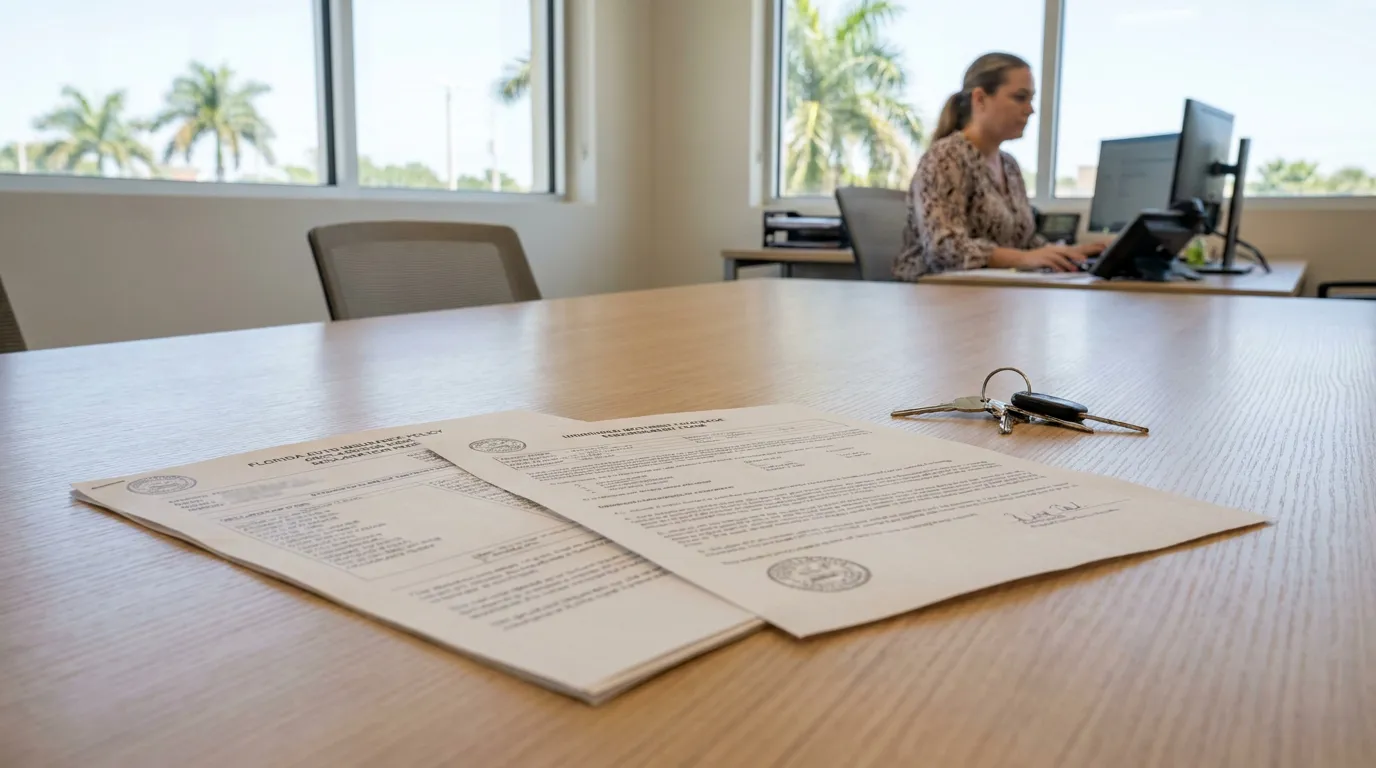
Stacked vs Unstacked UM Coverage Florida: The Core Difference
Stacking is the ability to add UM limits from multiple covered vehicles together for the same accident. If you insure three cars, each carrying $50,000 in UM limits, stacked coverage can combine them into a larger pool. With unstacked coverage, the limits stay separate.
Under Fla. Stat. § 627.727(8)(b), if at the time of the accident the injured person is occupying a motor vehicle, the uninsured motorist coverage available to her or him is the coverage available as to that motor vehicle.
Unstacked protection ties your recovery to the specific vehicle involved. However, statutory exceptions exist: if you’re injured while occupying a vehicle you don’t own and that isn’t owned by a resident family member, you may be entitled to the highest UM limit afforded for any vehicle on your policy.
This choice matters most when injuries are severe and the at-fault driver cannot pay. UM coverage steps in when the responsible party has no liability insurance or insufficient coverage. Understanding your election before an accident is one of the most valuable steps a policyholder can take.
Why This Choice Carries Real Weight in Miami
Florida sees high collision volumes, raising the odds of meeting an uninsured driver. State data reflects more than 1,000 traffic crashes reported daily in Florida. The Insurance Information Institute has reported that
approximately 15.9 percent of Florida drivers are uninsured as of 2022, with some Insurance Research Council estimates placing the figure as high as 20.4 to 20.6 percent, meaning a substantial share of at-fault drivers may lack coverage to pay for the harm they cause.
You can read more in the Insurance Information Institute’s report on the risk of skipping UM coverage in Florida.
How Non-Stacked Coverage Works Under Florida Law
Non-stacked coverage limits your recovery to the coverage on the vehicle tied to the accident. This is the defining feature.
When the insured accepts this option under Fla. Stat. § 627.727(8)(a), coverage on two or more vehicles cannot be combined to determine the limit available for one accident.
If the injured person is occupying a vehicle at the time of the accident, the UM coverage available is generally the coverage on that specific vehicle rather than the aggregate of all vehicles on the policy, subject to the statute’s limited exceptions for occupying a non-owned vehicle or being injured while not occupying any vehicle.
Stacked coverage offers broader protection at a higher price. The full statutory framework appears in Florida Statute 627.727, which controls how insurers must present and apply these options. Because the rules are technical and fact-sensitive, how a limit applies may depend on where you were, what you were driving, and your endorsement’s exact language.
Here is a simplified comparison:
| Feature | Stacked Coverage | Unstacked (Non-Stacked) Coverage |
|---|---|---|
| Combining limits | Limits from multiple vehicles may be added together | Limits are kept separate per vehicle |
| Premium cost | Generally higher | Generally lower due to a mandatory discount |
| Recovery pool | Larger for a single accident | Tied to the vehicle involved |
| Best suited for | Households wanting maximum protection | Policyholders prioritizing lower premiums |
The Cost Tradeoff: Premiums and Discounts
Choosing non-stacked coverage triggers a required premium reduction, so the lower price reflects narrower protection.
Under Fla. Stat. § 627.727(8), insurers filing revised rates must reflect a reduction in the uninsured motorist coverage premium of at least 20 percent for policies with such limitations.
That discount is why many drivers select unstacked coverage without fully appreciating what they’re giving up.
The savings can feel attractive until a catastrophic crash exposes the gap. When medical bills, lost wages, and long-term care costs exceed a single vehicle’s limit, an unstacked policy may leave you short. Reviewing your declarations page early pays off. If you’re unsure which option you elected, a knowledgeable stacked vs unstacked um coverage florida lawyer can help interpret the policy language and identify every available coverage source.
💡 Pro Tip: Keep a current copy of your auto policy declarations page accessible. After a crash, knowing whether your UM coverage is stacked or unstacked helps you and your attorney evaluate realistic recovery much faster.
Renewals: Why a One-Time Election Can Follow You for Years
A non-stacking election generally carries forward automatically at renewal. Many drivers assume a fresh policy period resets coverage, but that’s often not the case.
Under Fla. Stat. § 627.727, acceptance of the stacking limitations applies to any policy which renews, extends, changes, supersedes, or replaces an existing policy unless the named insured requests deletion of such limitations and pays the appropriate premium.
The discount and limitation both persist until you affirmatively change them.
The statute also limits when insurers must offer higher UM limits again.
When an insured has initially selected limits of uninsured motorist coverage lower than their bodily injury liability limits, higher limits of uninsured motorist coverage need not be provided in or supplemental to any policy that renews, extends, changes, supersedes, or replaces an existing policy with the same bodily injury liability limits unless an insured requests higher uninsured motorist coverage in writing.
Consider these steps before filing a claim:
- Review whether your UM coverage is stacked or unstacked on your declarations page.
- Ask your insurer, in writing, about the cost to add stacking or increase limits.
- Confirm every household vehicle is listed and rated correctly.
How a Miami Auto Accident Lawyer Can Help After an Uninsured Driver Crash
A knowledgeable Miami car accident attorney can help locate coverage you may not realize you have and pursue full recovery beyond PIP limits. Florida’s no-fault system provides limited personal injury protection, and serious injuries often require stepping outside PIP. Proving losses generally involves building the elements of negligence: duty, breach, causation, and damages, supported by police reports, medical records, witness statements, and sometimes accident reconstruction.
UM coverage functions as a financial safety net when the responsible driver cannot pay. If you were riding a motorcycle or dealing with a hit-and-run, our discussion of uninsured motorist claims for riders offers additional context. Every claim turns on its own facts, and no article substitutes for a review of your specific policy and injuries.
Frequently Asked Questions
1. Is UM coverage required in Florida?
UM coverage must be offered, but you can reject it in writing. Florida law requires insurers to make uninsured motorist coverage available with liability auto policies, and section 627.727 affords the insured the right to reject that coverage.
2. Does unstacked coverage mean I have less protection?
Generally, yes, because unstacked coverage cannot combine limits across vehicles. The available amount is typically tied to the vehicle involved, subject to limited statutory exceptions. Whether that’s adequate depends on your injury severity and total limits.
3. Why is my unstacked premium lower?
Florida law requires a discount of at least 20 percent on the UM premium for non-stacked policies. That reduction exists because the insurer’s potential exposure is lower. The savings come with the narrower recovery pool described above.
4. Can I switch from unstacked to stacked coverage?
In many cases you can, but you must request the change in writing and pay the higher premium. A non-stacking election typically carries forward at renewal unless you affirmatively delete the limitation. Contact your insurer directly as the first step.
5. What if the at-fault driver has no insurance at all?
Your UM coverage is designed for that situation. It can help cover damages when the responsible driver cannot pay. The amount available depends on whether your policy is stacked or unstacked and your selected limits.
Protecting Your Recovery Starts With Understanding Your Policy
Understanding the difference between stacked vs unstacked um coverage florida drivers carry can shape the entire outcome of an uninsured motorist claim. Stacked coverage combines limits for broader protection at higher cost, while unstacked coverage keeps limits separate in exchange for a mandatory premium discount. Because the statutes are technical and outcomes depend on your exact policy and crash facts, reviewing coverage with knowledgeable counsel can help you avoid unwelcome surprises.
If an uninsured or underinsured driver left you injured, don’t navigate the claim alone. Reach out to Barzakay Law Firm today, call 1-800-487-8123, or request your consultation through our confidential contact page so we can help you pursue the full recovery you deserve.